


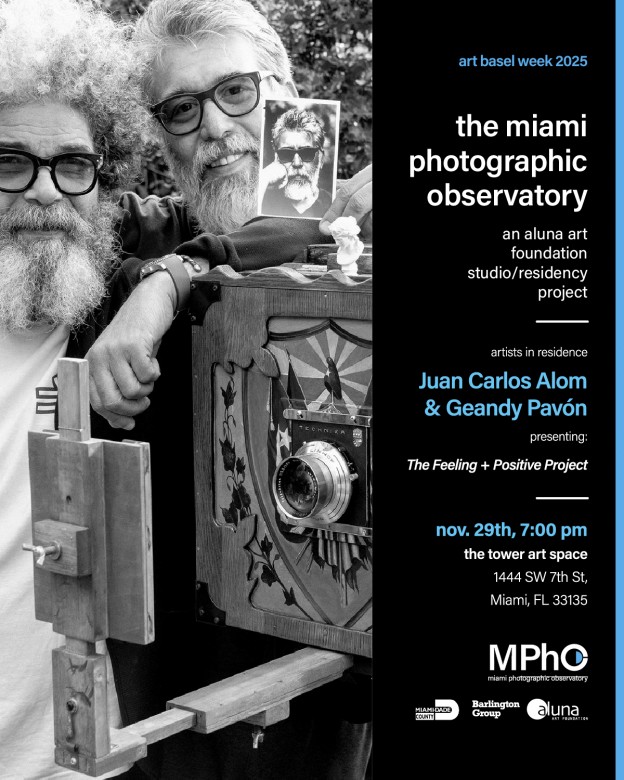
MphO announces the opening of its third residency with “The Feeling + Positive Project”
Miami, November 29th, 2025
Art Basel Week | Aluna Art Foundation announces the opening of the third residency of its project, the Miami Photographic Observatory (MphO), with “The Feeling + Positive Project”, an exhibition by artists Juan Carlos Alom and Geandy Pavón. With the support of the Miami–Dade County Department of Cultural Affairs, the Cultural Affairs Council, the Mayor, and the Miami–Dade County Board of County Commissioners.
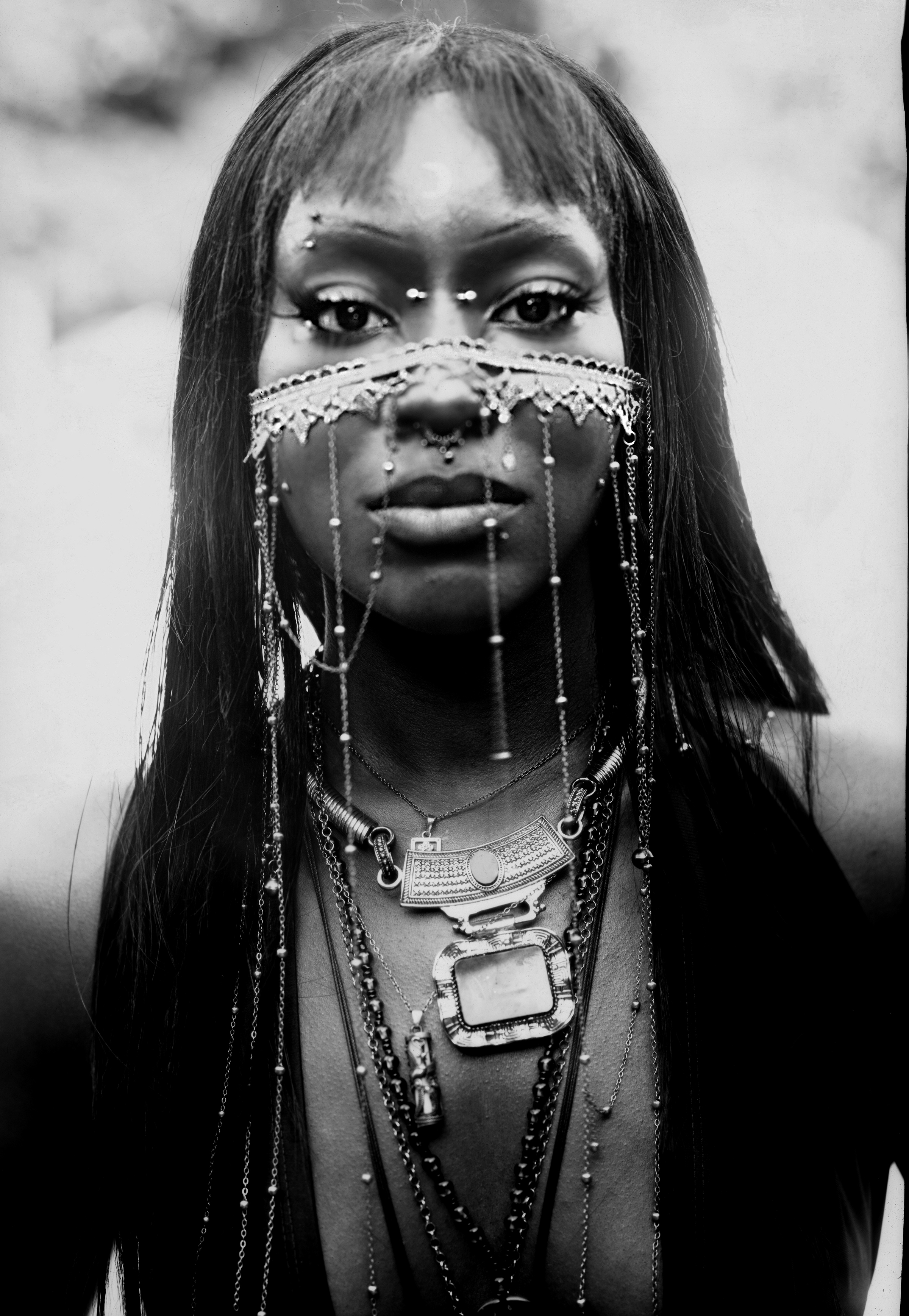
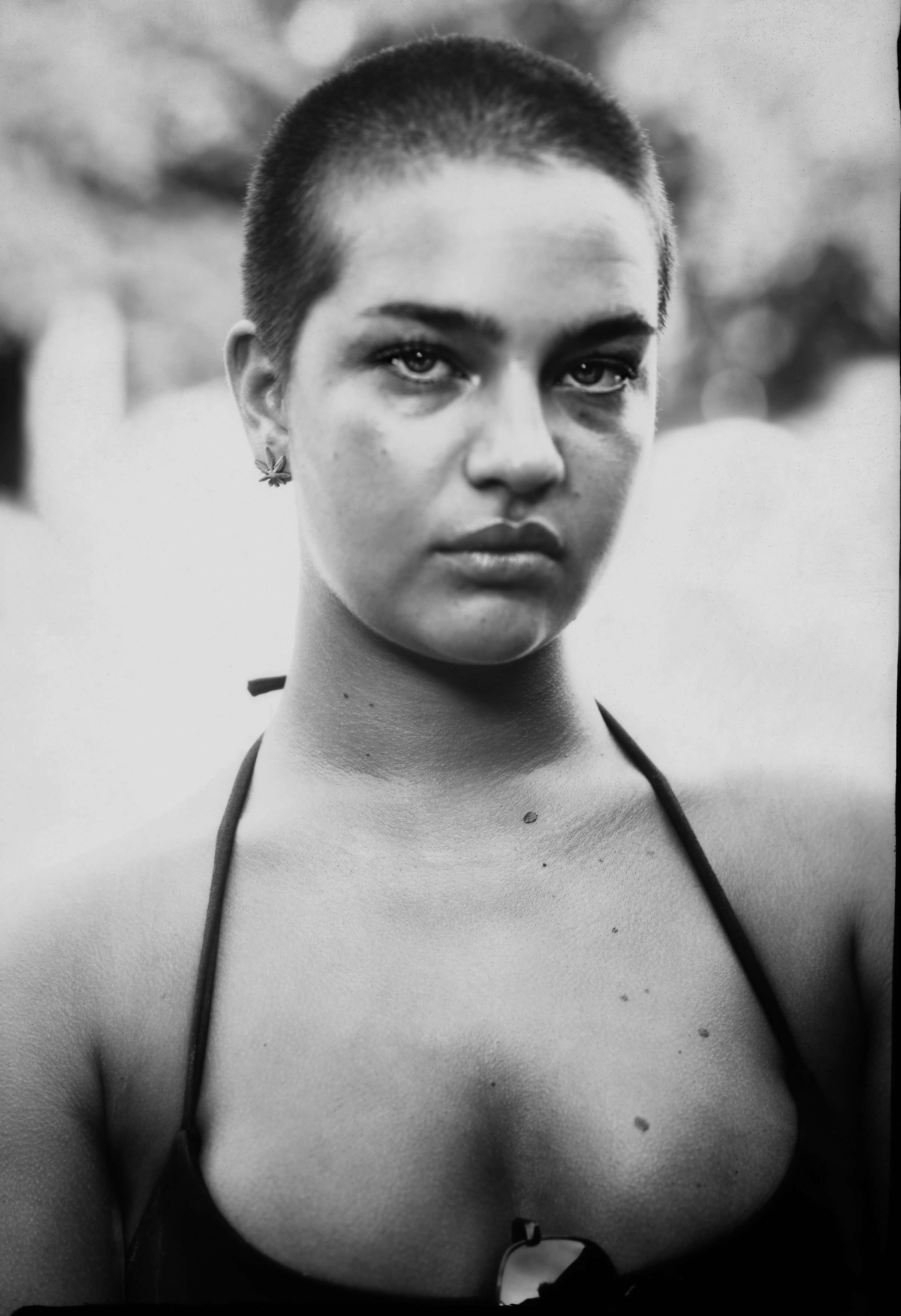
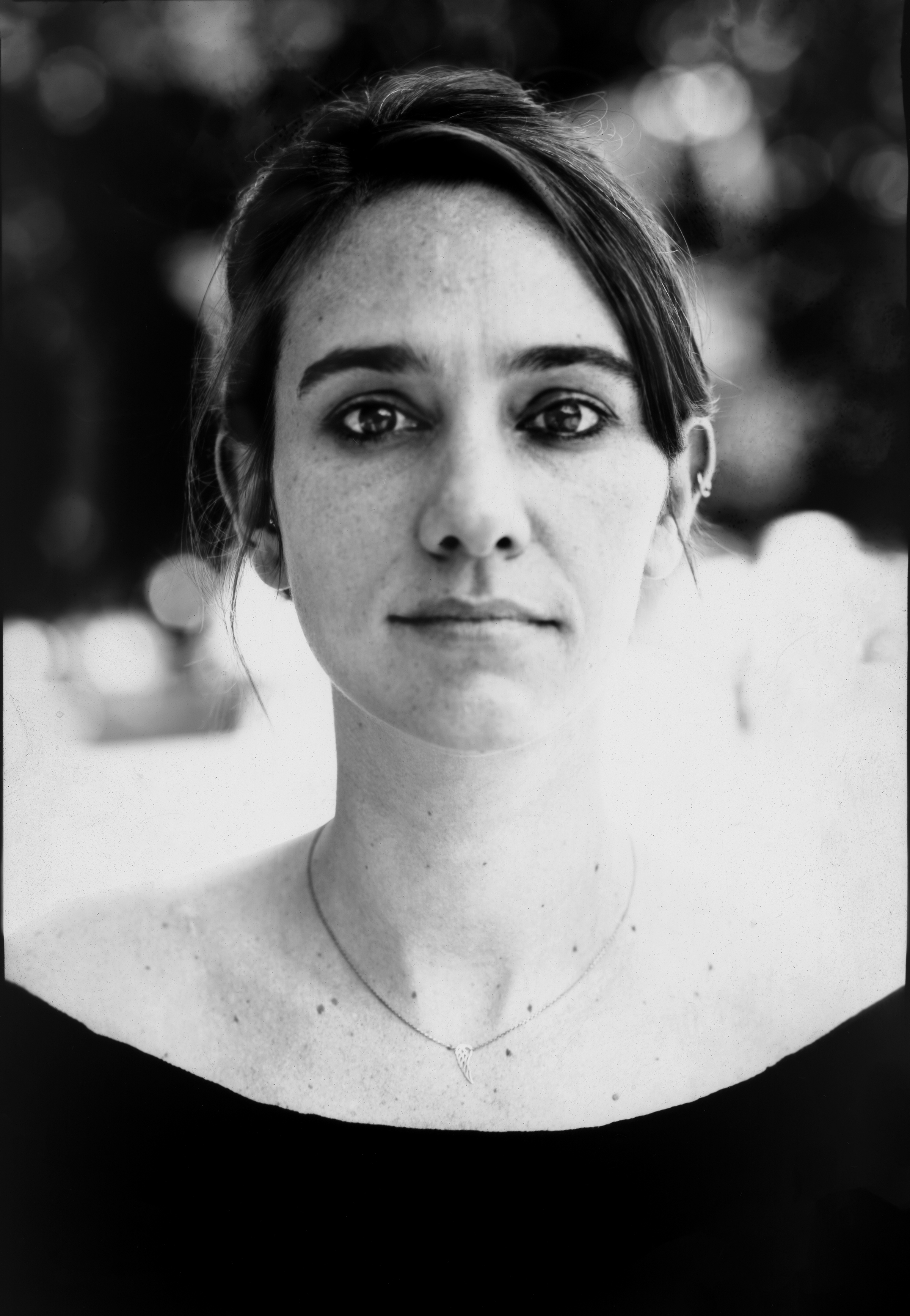
At the heart of Little Havana—on the pedestrian crossroads where 15th Avenue meets 8th Street—Alom and Pavón will spend several days capturing the faces of residents and wandering travelers alike. Their work will unfold as a living chronicle of the neighborhood’s socio-cultural and human fabric, created with a singular analog device that is both camera and darkroom, a crafted instrument born from their own hands.
According to the artists, the project “rescues and recontextualizes the once-popular tradition of the ‘Minutera Camera’—known in Latin America as the ‘Cámara de Cajón’ (Box Camera) or ‘Cuban Polaroid,’ and in Central Asia as the ‘Afghan Camera.’ Once common in public squares in Havana or Kabul, this practice now survives only at the margins, as nostalgic curiosity or tourist attraction. (…) What is new in the Feeling + Positive Project is not the reproduction practice but its reconceptualization through the lens of contemporary art. It reclaims what is perhaps the humblest of photographic practices—a craft of the public square, precarious in its materials and simple in its mechanics—and restores to it dignity and symbolic complexity. Our practice seeks to expand that horizon, proposing a new vision of the photographic that unites technical archaeology, social performance, visual poetry, and political critique.”
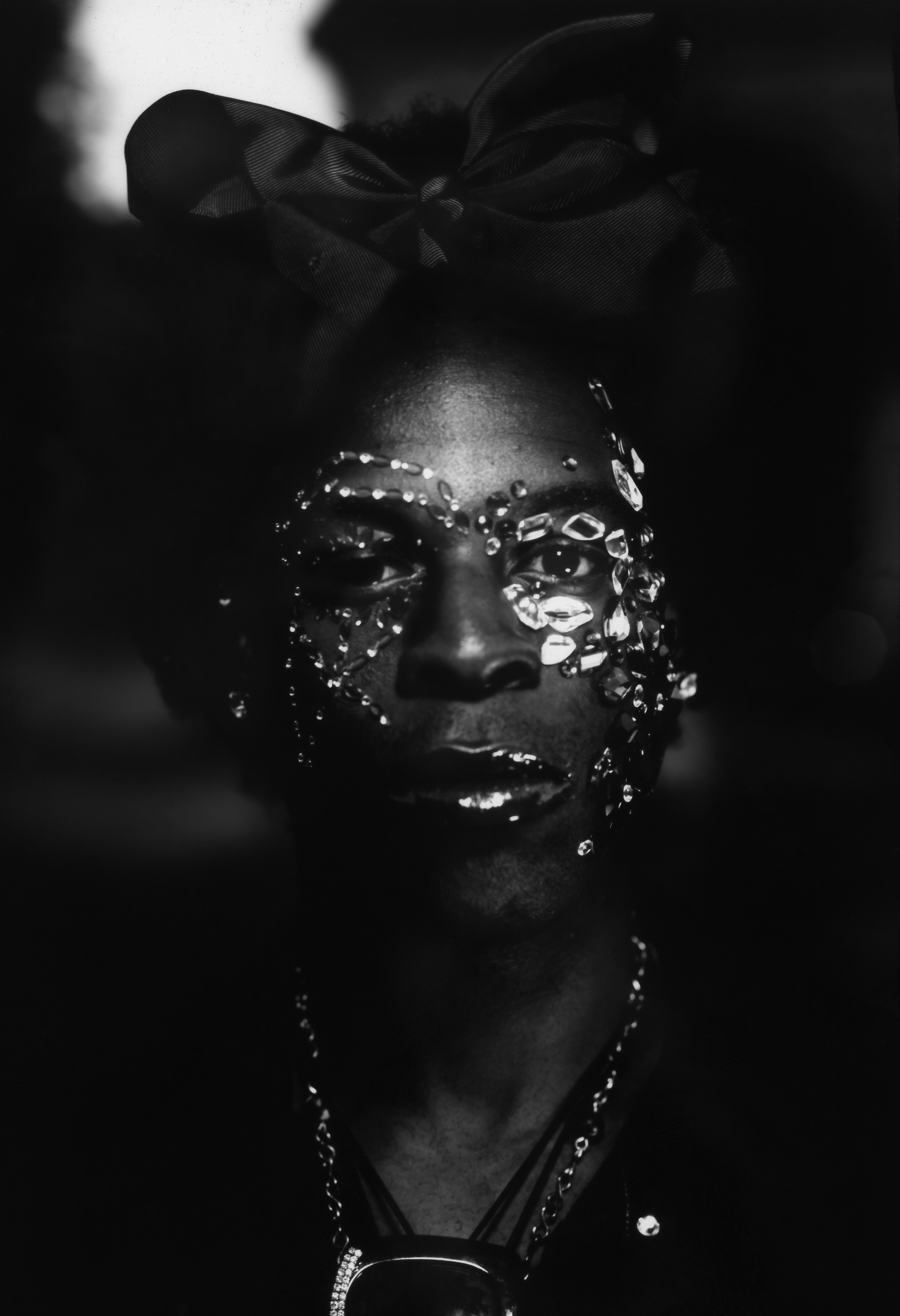
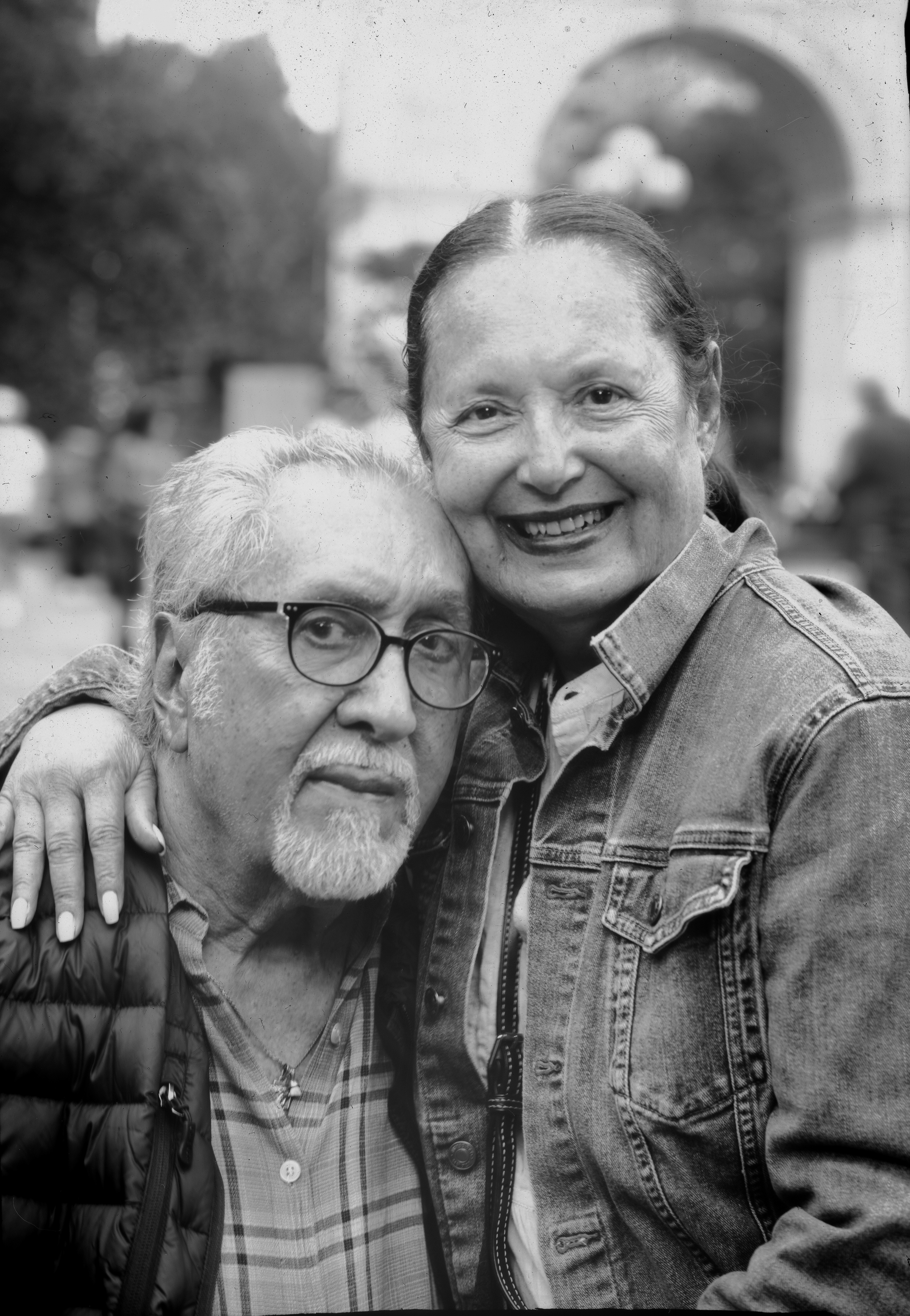
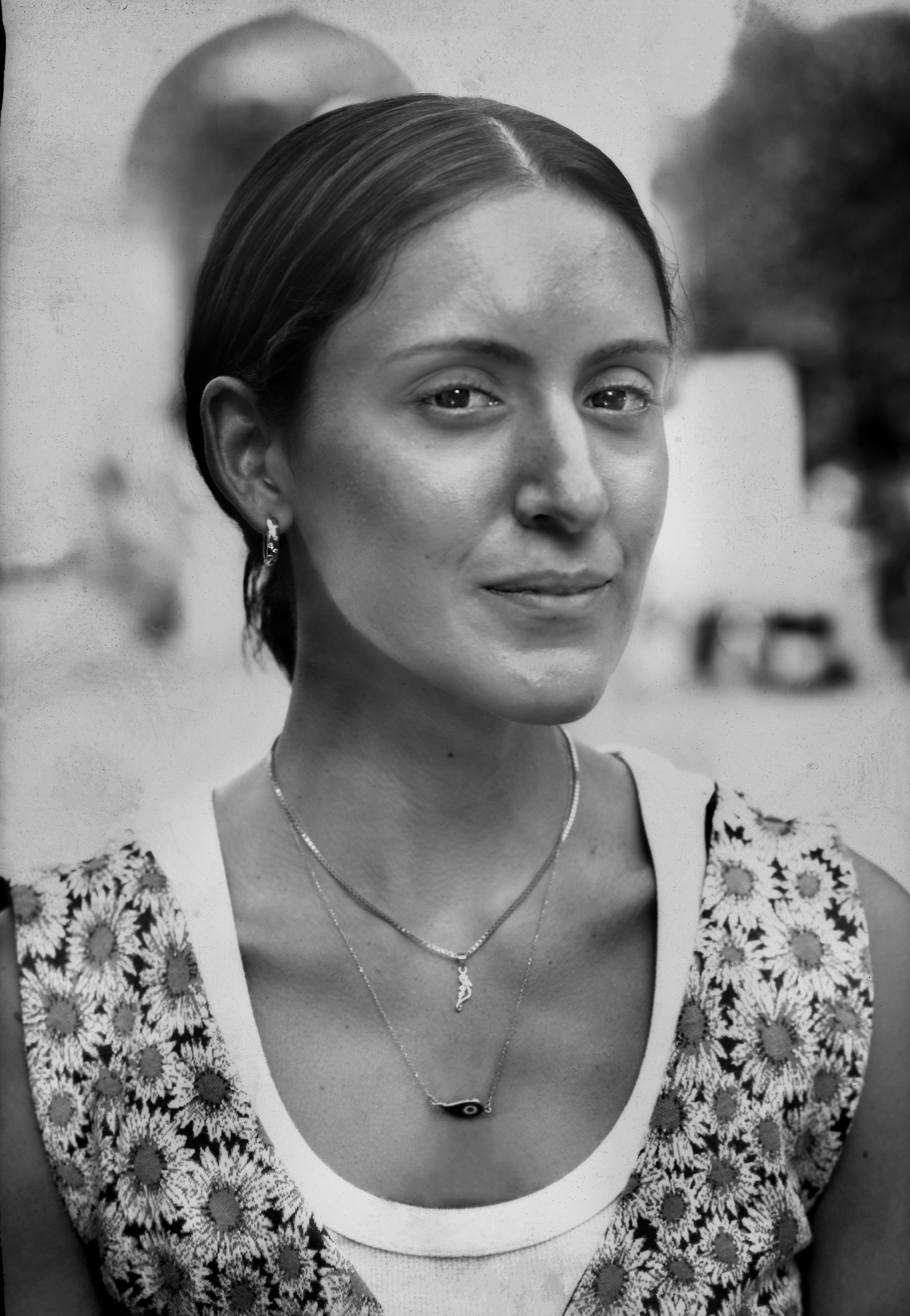
The exhibition at the MPhO studio/residency will bring together several archives from these two long-established photographers and artists. The duo will present the images from the Feeling + Positive Project (originally conceived in New York City), along with Geandy Pavón’s “Superheroes” series and a selection of photographs by Juan Carlos Alom. We invite the community to take part in the Feeling + Positive Project – Little Havana Edition. In the coming days, we will announce the schedule during which the team will be photographing on 15th Avenue and in the park adjacent to the Miami Beach Convention Center throughout the days of Art Basel. We encourage residents, visitors, and anyone interested in participating in this collaborative portrait project to join us and become part of this living visual archive.
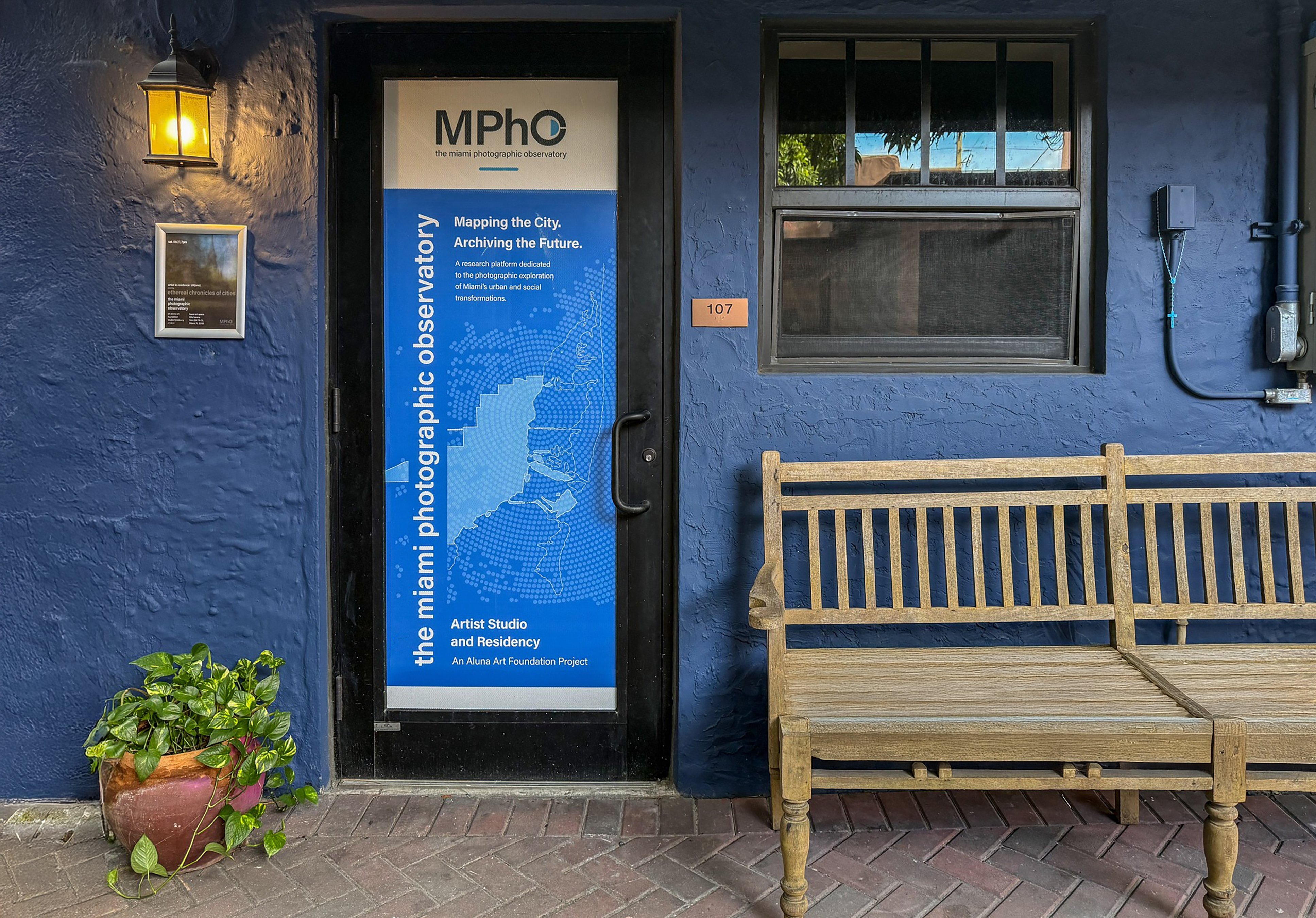
The Miami Photographic Observatory | Studio/Residency. 1444 SW 7th Street, Miami, FL 33135
About the artists
Juan Carlos Alom (Havana, Cuba, 1964) is an experimental filmmaker and photographer whose work has been exhibited in Cuba, the Americas, Europe, and South Africa. He began his career as a photojournalist in Cuba during the 1990s, developing an artistic vision shaped by the spontaneity and urgency demanded by that period of crisis.In 2000, Time magazine selected him as one of the 100 Latin American photographers of the millennium. His photographic work is included in the permanent collections of the National Museum of Fine Arts of Cuba; the Los Angeles County Museum of Art (LACMA); the Ludwig Forum for International Art (Germany); the Fototeca de Pachuca (Mexico); the PANN Museum; the Blanton Museum of Art at the University of Texas; Tate Modern (United Kingdom); and the Frost Museum (Florida, USA).
Geandy Pavón (Havana, Cuba, 1974) is a multidisciplinary artist whose work examines the pathologies of power and the sociopolitical conditions shaped by totalitarianism. Working across photography, video, and painting, Pavón constructs a body of work that navigates the intersection of political critique, historical memory, and the poetics of the image. In 2020, Pavón was awarded the CINTAS Fellowship in Visual Arts for his series Quarantine: 40 Days and 40 Nights, created during the recession sparked by the Covid-19 pandemic—one of the most significant recognitions granted to artists of Cuban origin.






Miami Photographic Observatory inaugurates “Ethereal Chronicles of Cities” by Lili(ana)
09/27/25
Miami Photographic Observatory inaugurates “Ethereal Chronicles of Cities” by Lili(ana)
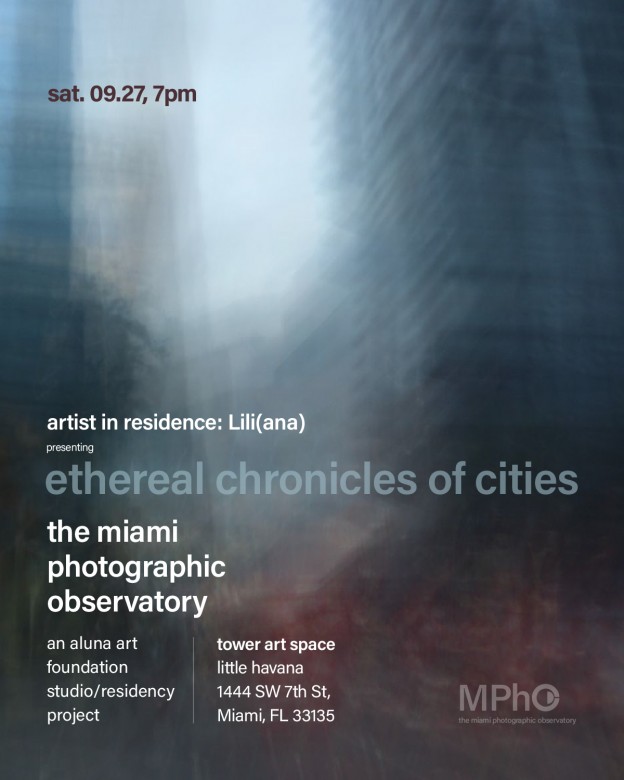
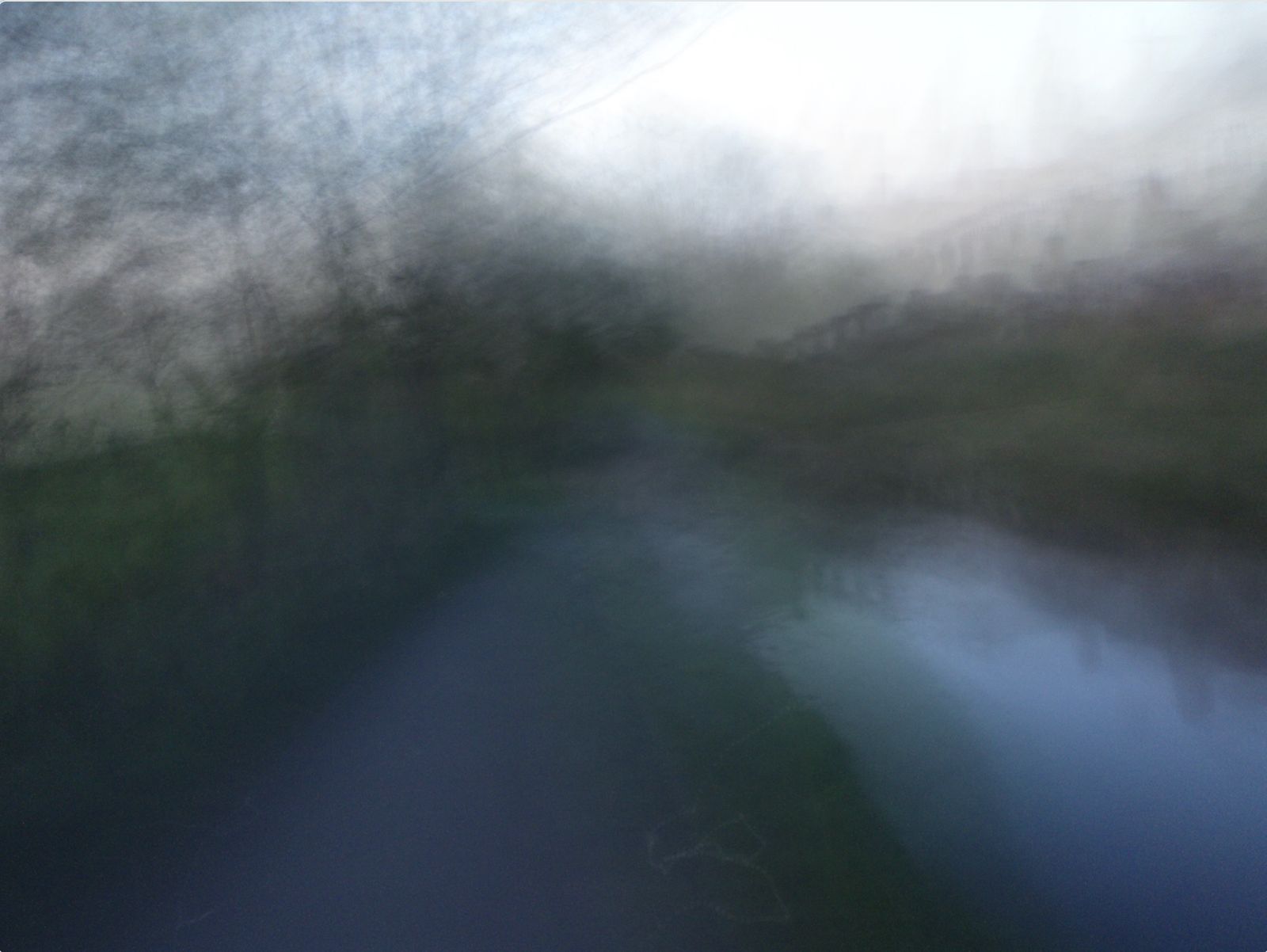
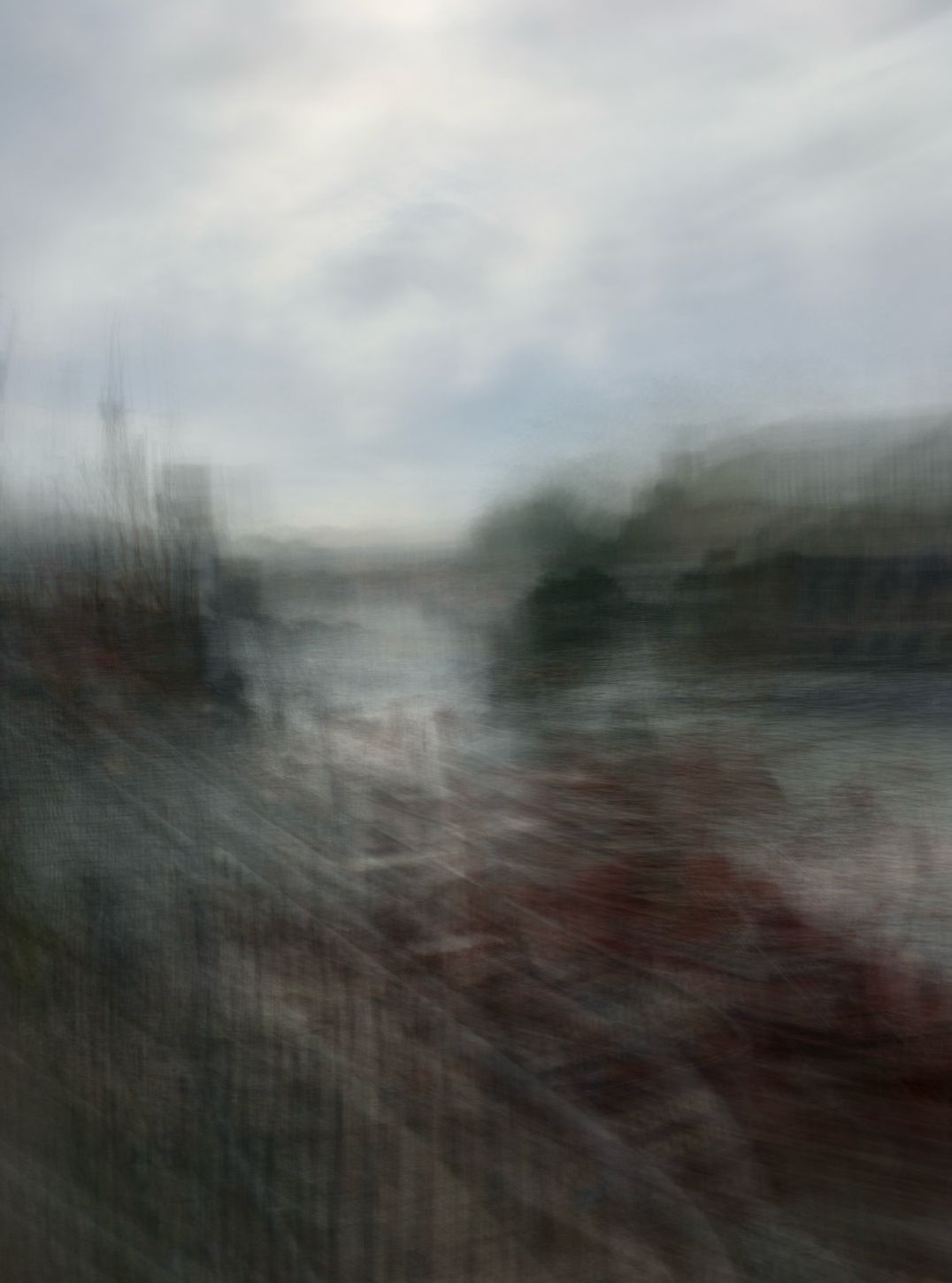
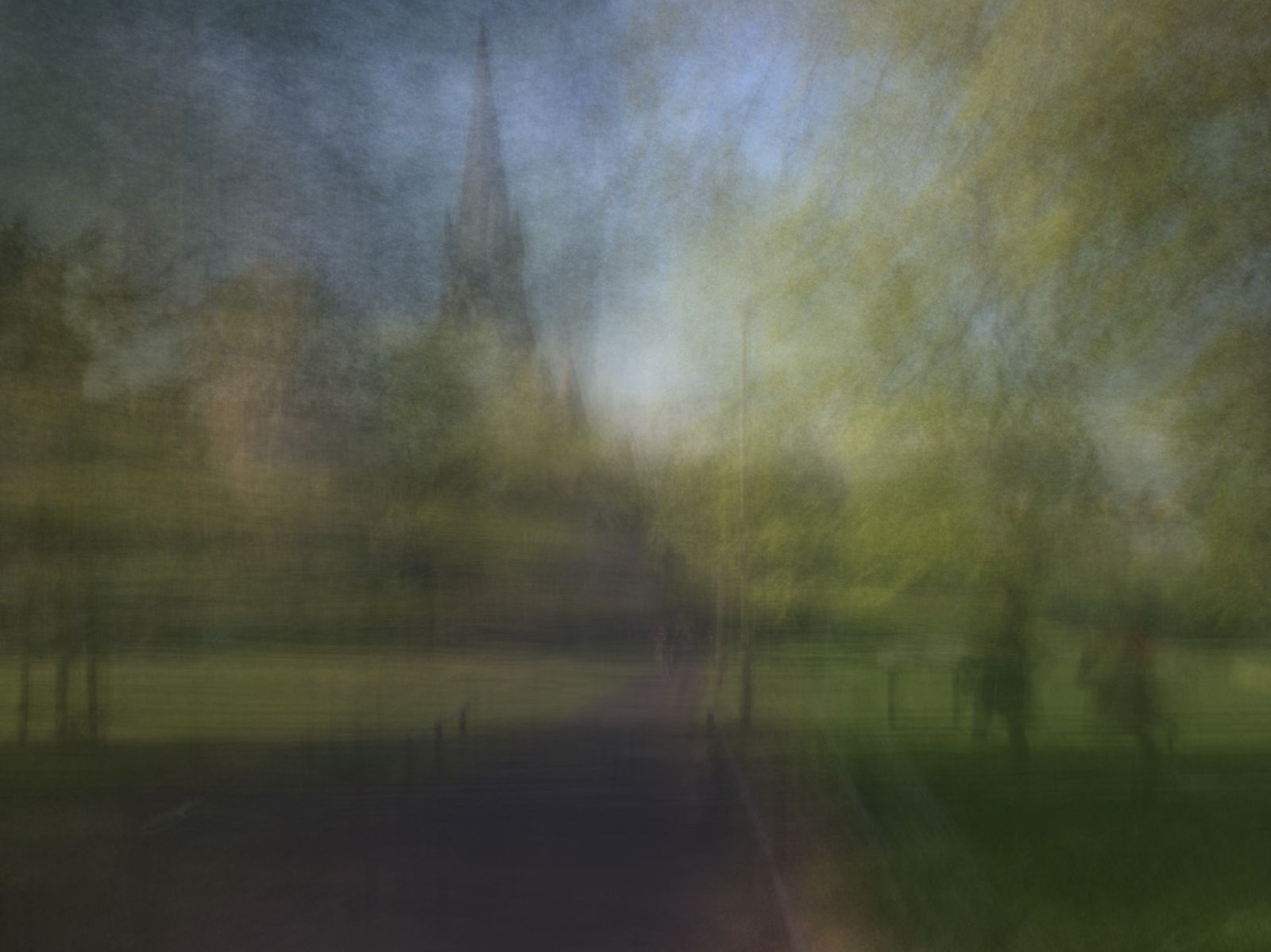
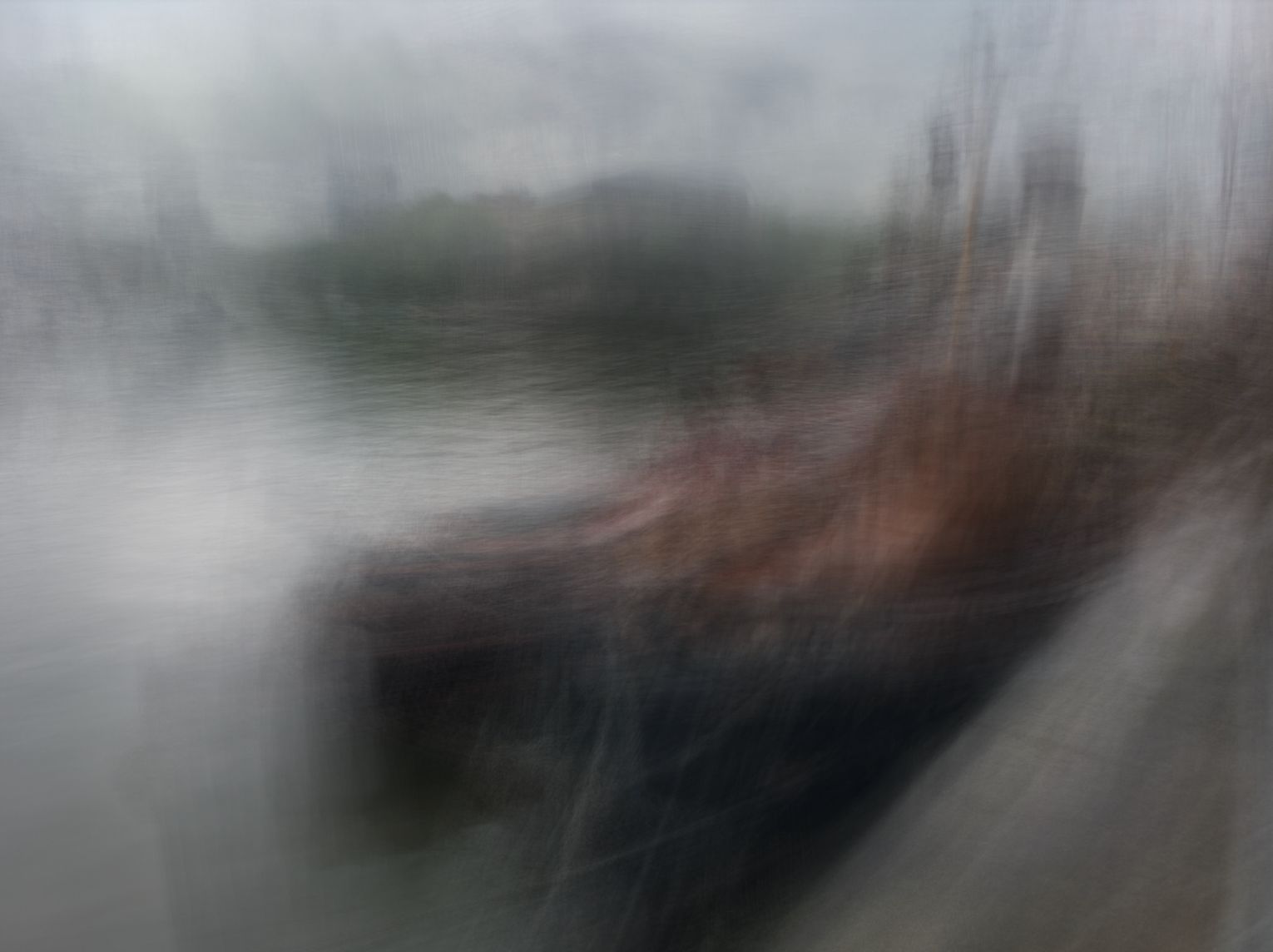
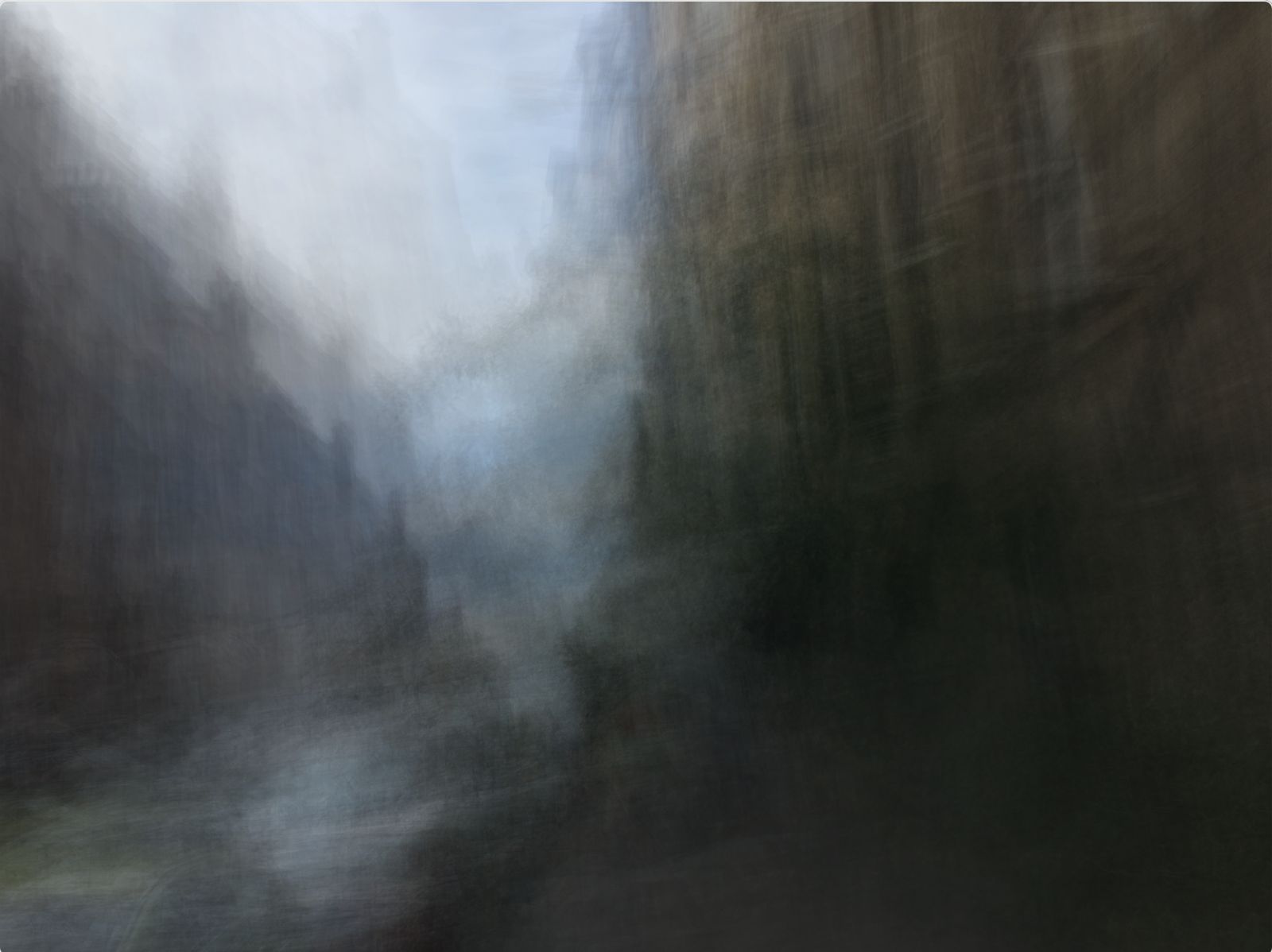
Aluna Art Foundation announces the opening of the second residency of its project, the Miami Photographic Observatory, with “Ethereal Chronicles of Cities”, an exhibition by Lili(ana), who has made Miami her home since 1997.
Cities, wrote Italo Calvino, “are a collection of many things: memories, desires, signs of a language; they are places of exchange, as every economic history book explains, but these exchanges are not only of goods—they are also exchanges of words, desires, memories.” Lili(ana) wanders through the cities, which have been expanding relentlessly, with a powerful instrument in her hands: a camera.
“At the threshold of the visible,” she explains, “the camera captures the moment of encounter with the intangible forces that animate our world. Each photograph is influenced by the singularity of the instant in a place. What the camera receives in that instant remains sacred, unalterable. What emerges reveals not just what appears before the lens, but what exists [or has existed] in those liminal spaces—the infinite possibilities that dwell in those hidden realms.”
Her wanderings follow intuitive drifts, yet also the paths traced by memory itself, by the very configuration of each city. She seeks to grasp through the lens (an extension of her inner gaze) that other parallel body, somehow gravitating or invisible, which gives rise to the ethereal images of her work. “Since 1999, I have been engaged in this exploration I name ‘Beyond this visible world’—a title that serves as an open framework, giving me the freedom to move forward or retreat without limit of expression.” Surpassing the visible boundaries of the medium, and using photography as “a tool for access and give expression to the inaccessible,” she creates images that function as passages of encounter, inhabited by “that which seeks to be revealed”: ethereal planes that hover over the physical world, timelessly holding the energy and the imprint of all that has ever dwelled within them.
The resulting images remain open to the polyhedral reading of the thousand-and-one eyes that will behold them. In contemplating them, we could not help but recall, on one hand, the chapter of the subtle cities that Italo Calvino held so dear, and to reflect once more on the possibility that photography might recover the “aura” Walter Benjamin feared would vanish in its mechanical reproduction. In that chapter of his book Invisible Cities, Calvino unfolded “a theme of lightness curiously linked to the theme of the city,” which for him carried a “visionary evidence.” The photographs unfolding from Lili(ana)’s wanderings, for their part, hold aesthetic and ethereal visions distilled from the very existence of cities themselves. For her first exhibition at the Miami Photographic Observatory, four cities gather: Miami and its Everglades, Bristol, Edinburgh, Santiago de Compostela, and Bilbao.
If Benjamin attributed decisive importance to the fact that the aura of a work of art should never be severed from its ritual function, then this is precisely the function that brings these photographs into being. They do not merely encapsulate the desires that shaped the cities, but also the multitemporal and gravitating memories that mark the courses of their existence. In creating her photographs, the artist also undertakes spiritual work through which she tends to, and cares for, the aura of the cities themselves. Lili(ana)´s practice carries within it her parallel vocation: that of a healer of memories, as personal as they are collective.
About Lili(ana)
She is an American Venezuelan artist born in Panama. Her project Fore(st)sight …Pondering on the Future of Forest, has traveled, taking on different forms and resulting in solo exhibitions at the following venues: MIFA Gallery, Miami, Florida (2025), Bernheim Forests and Arboretum in Clermont, Kentucky, during their ColorFest event (2024), C.B, Smith Park, Pembroke Pines, Florida, USA (2022-2023).
Lili(ana)´s work has been featured in Hungary, France, Spain, China, Argentina, Dominican Republic, and Venezuela, as well as in the United States. Notable venues include the Universitat de València, in Valencia, Spain; the Museum of Latin American Art in Long Beach, California; Zendai MOMA in Shanghai; and Museo Granell in Santiago de Compostela, Spain. Her practice extends to online university seminars, digital exhibitions, art fairs, and international festivals like the Budapest Photo Festival in 2018. She received two consecutive Broward County Artist Support Grant Awards.

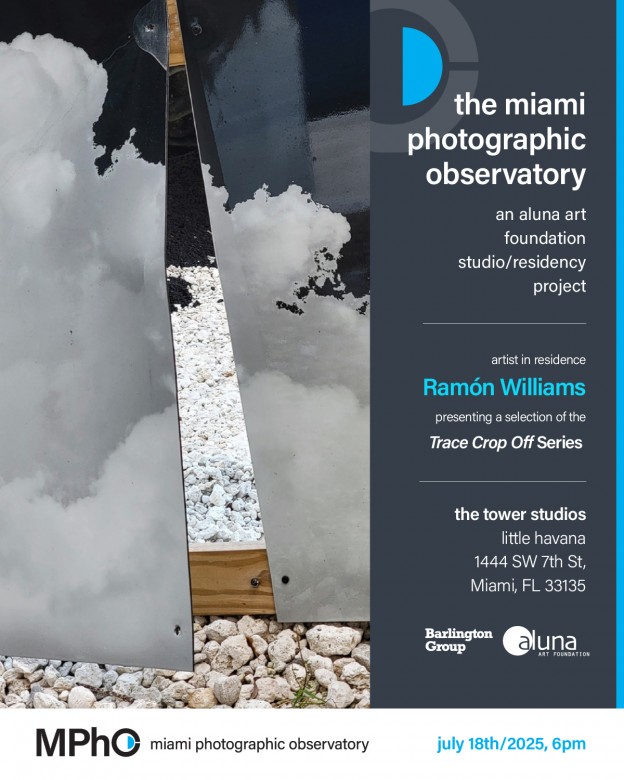
Ramón Williams is the inaugural invited artist for the Miami Photographic Observatory (MPhO).
Miami, July 16th, 2025
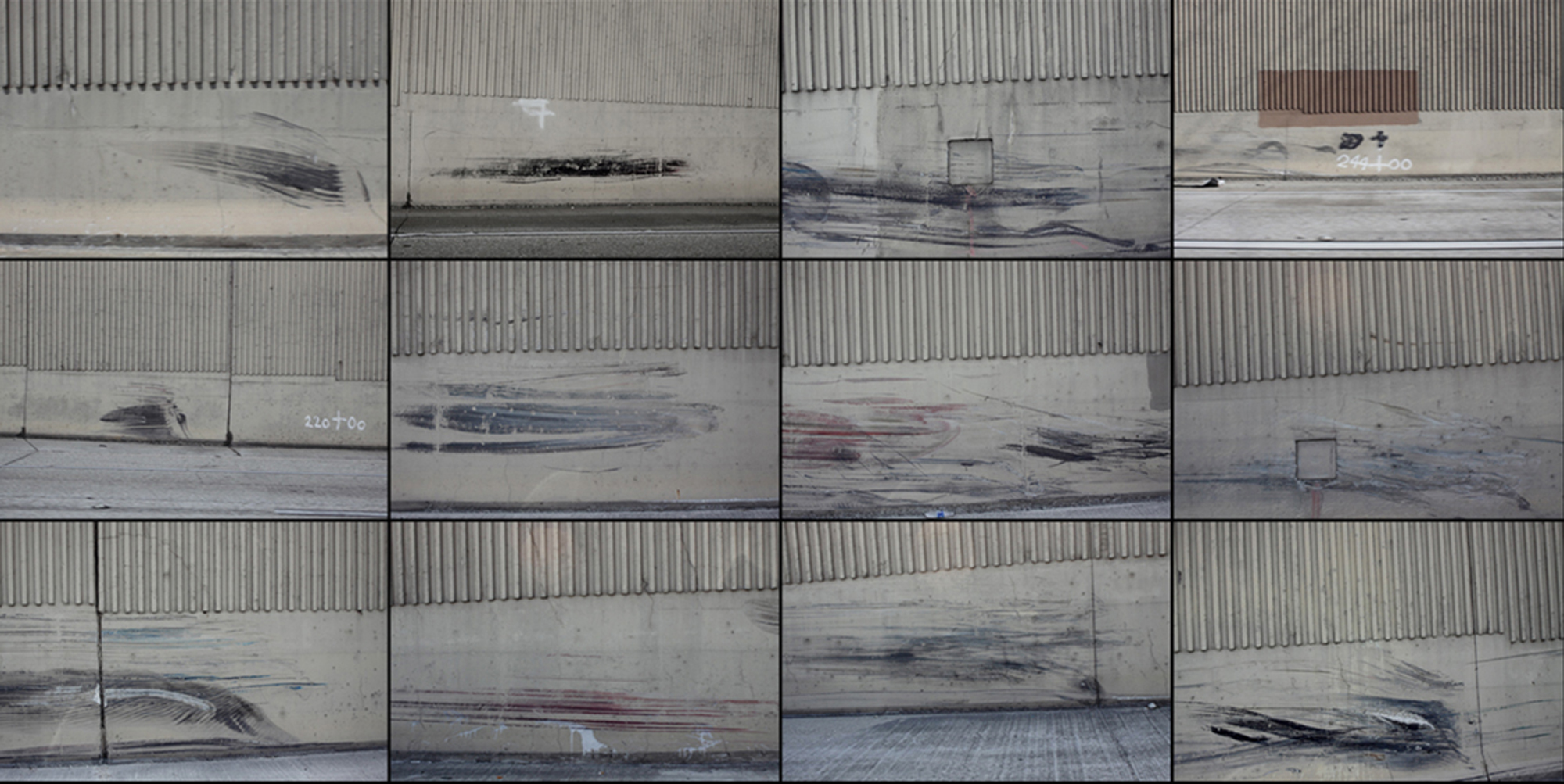
Ramón Williams is the inaugural invited artist for the Miami Photographic Observatory (MPhO). The Observatory will exhibit a selection of images from his Trace Crop Off series, a unique documentation of the city initiated upon his arrival in 1996. Additionally, Williams has been commissioned to create an alternate documentation using drones to capture Little Havana’s green spaces. His selection highlights the distinctive way he has documented Miami through an unembellished poetic approach that conceptually decodes and recodes the keys to the city’s contradictory nature. Avoiding idyllic natural paradises and seductive stereotypes of luxury and fame commonly associated with Miami, Williams’ incisive lens captures the layers beneath the urban epidermis. Through photographic chronicles of found scenes, Williams employs relentless humor to portray the intervals within the city’s ongoing spectacle, revealing the authentic Miami beneath its façade.
Thus, emerges his incessant wandering to photograph the narratives told by faded walls, stains, and traces. He searches not only on architectural surfaces, but also on expressway pavements and colossal trucks displaying peeling advertisements. In his continuous drift through the city, consistently countering the spectacle, he seeks—as a faithful disciple of Guy Debord and Joseph Kosuth—the precise instant when letters fade and sharp conceptual language games arise.
Williams’ urban mappings originate from strictly documentary findings, yet his chosen framing and compositional sharpness yield photographic series distinguished by abstraction. These images capture gaps, contradictions, the discovery of verbal and visual puns, and the intrusion of alternative meanings within found kitsch. Ultimately, they form photographs that also act as hypertexts connected to Rauschenberg, Rothko, and the broader history of American abstraction.
The traces captured by Ramón Williams—where advertisements peel away, neon lights dim, and walls flake—are serendipitous encounters, chance exercises reminiscent of the unexpected juxtaposition of a “sewing machine and an umbrella,” representing the urban machinery in Miami’s post-party daylight. Consequently, he creates a cohesive body of work imbued with affection for the place in which he lives, yet simultaneously revealing the stark image of a stripped-down city.
The Miami Photographic Observatory (MPhO) Opens its Doors as an Artistic Residency.
Miami, July 16th, 2025
The Miami Photographic Observatory (MPhO) Opens its Doors as an Artistic Residency.
The Miami Photographic Observatory (MPhO) opens its doors as an artistic residency and platform dedicated to studying, through photographic imagery, the urban evolution and current configuration of Miami’s vital spaces. Local and international photographers, filmmakers, and visual artists will have access to an equipped studio/gallery space where they will develop commissioned projects curated by Aluna Curatorial Collective. Throughout their stay, artists will also have the opportunity to exhibit previous works alongside visual outcomes created during their residency.
The artists-in-residence at MPhO will map various sectors of the city, creating updated visual archives to be presented on artistic and educational platforms. These archives will function not only as visual chronicles of a landscape and its time but also as interactive fields of dialogue between imagery and theory. From this interplay of iconographic archive and theoretical research, MPhO will host a series of talks featuring sociologists, demographers, architects, urban planners, and scholars interested in exploring the broader implications of the artists’ documentation.
The outcome of this multidisciplinary research will be gradually collected and organized on MPhO’s website. The visual mappings created by the residents will be presented in thematic exhibitions at Aluna Art Foundation’s space in Little Havana. Over time, the Miami Photographic Observatory aspires to become a vital visual and theoretical platform for studying the city’s heritage and understanding its transformations during the early 21st century.

Aluna Art Foundation inaugurates its new headquarters in Little Havana with this exhibition inspired in The Aleph
Aluna Art Foundation (AAF) inaugurates its new headquarters in Little Havana with this exhibition inspired in The Aleph by Jorge Luis Borges. The opening marks the beginning of an expansion of wide-reaching curatorial initiatives. This art space is part of Tower Space, a project conceived in collaboration with Barlington Group, which enhances the experience of contemporary art in this emblematic neighborhood.
The Aleph and Other Portals is a curatorial project shaped collectively with the artists Carola Bravo, Gretel Capriles, Agustín Di Luciano, Elfriede Fett-Crohare, Feco Hamburger, Kenzie Funk, Flor Godward, Andrés Michelena, Ronald Morán, Mario Rodríguez “Mareo”, and Gladys Triana. The show features documentation of a piece by Julieta Aranda. Sebastián Elizondo has made an intervention in the bathroom space—which fascinated Duchamp—using a urinal documentation and an animation derived from Eadweard Muybridge frames. Capriles, Di Luciano and Godward form part of the Tower Studios.
The Aleph and Other Portals’ production was made possible with the support of Tower Hotel, DC Foundation, Janaina Torres Galeria, the 55Project, the Brazil-USA Cultural Center of Florida (CCBU) and 108 ArtProjects.
Aluna Art Foundation
1440 SW 7 St, Miami 33135. Ph: 786-587-7214
UPCOMING EVENTS
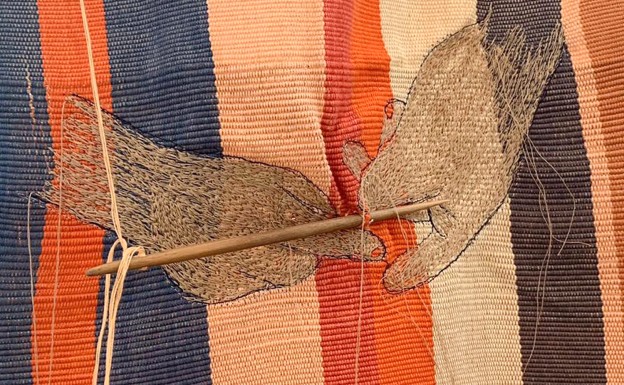
Florida Humanities and the National Endowments for the Humanities supports educational programing during Threading the City, a series of fiber art exhibits across Miami.
Florida Humanities supports educational programming during Threading the City, a series of Fiber Art Exhibits across Miami.
Funding from Florida Humanities and the National Endowment for the Humanities will support public educational programming in conjunction with Threading the City, a fusion of the Fiber Artist Miami Association (FAMA), the World Textile Art (WTA), local art curators, and art historians. A great range of textile art exhibits and educational events will thread across Miami from October 20022-January 2023.
FAMA’s first edition of citywide events, exhibitions, textile workshops, lectures, studio visits, and artist talks will take place in partnership with PINTA Miami, Aluna Art Foundation, Artnezs, the Cultural Institute at the Consulate General of Mexico (Miami), the Museum of Contemporary Art of the Americas, formerly known as Kendall Art Center, The CAMP, the Hartvest Project Pinecrest, Piero Atchugarry Gallery, RTCurated, Tanya Brillembourg Art, and Partners for Art & Design.
Florida Humanities awarded a Community Project Grant Award to Aluna Art Foundation for the public programming of Threading the City. Lead scholar Adriana Herrera, Ph.D., joins other invited scholars, including: Carol Damian, Ph.D., Carola Bravo, Ph.D., Francine Birbragher Ph.D., Shelley Burian, Ph.D and Batia Cohen, Ph. D. Topics to be explored include the Pre-Hispanic origins of modern and contemporary fiber art and its continued presence in Latin America as well as sociopolitical uses of textile art in the 21st century.
Programed Educational Events
Saturday, October 22, 2022, at 3:00 pm: First in a series of talks by Dr. Adriana Herrera is Threading Textile Times which will take place at Piero Atchugarry Gallery under artist Karla Kantorovich’s immersive installation Ámate, curated by Rina Gitlin. Dr. Herrera, co-founder of the Aluna Art Foundation, will lecture on the influence of the legacy of pre-Hispanic textiles on modern and contemporary textile art in Europe and the United States. Her presentation includes examples of this legacy in the work of prominent artists throughout the continent and mentions of local artists who extend the thread of that influence. The talk will culminate with a dialogue on how artist Karla Kantorovich’s installation Ámate, contains cues from Mesoamerican ancestral cultures in her contemporary artistic language.
Friday, November 11, 2022, from 5 pm to 6 pm: A conversation with a group of local artists participating in the exhibition Subverting Materials: Fiber and Textile Art by Women Artists, curated by Dr. Francine Birbragher for the Museum of Contemporary Art of the Americas, with works by Aimee García, Aimee Pérez, Allison Kotzig, Evelyn Politzer, Ivonne Ferrer, Karla Kantorovich, Liberty Worth, Milena Martínez-Pedrosa, and Valerie Lustgarten. The Miami-based artists will dialogue about the ancestral and contemporary representation of women’s fiber art.
Zoom Talk | November 17, 2022, from 4 pm to 5 pm: Threading the City’s virtual panel discussion features art historian and Pre-Columbian Art experts Carol Damien, Ph.D., and Shelley Burian, Ph.D., moderated by Adriana Herrera, Ph.D. The discussion, titled Circularity of Textile Time will explore the relationship between pre-Hispanic textiles and modern fiber art and will examine the living presence of indigenous art not only in contemporary artists who are direct descendants of native peoples, but also in other Latin American artists, including some Miami artists who work with fiber.
Pinta Art Fair | December 3, 2022, at 3:00 pm: As part of the PINTA TALKS during PINTA Miami 2022, a conversation with local artists Pip Brant, Aurora Molina, and Evelyn Politzer, moderated by Adriana Herrera Ph.D., will reflect aspects of politically charged fiber arts, and ways of exploring the relationship between history, ancestral fiber traditions, and contemporary textile art.
December 10 at 12:00 pm: Dr. Adriana Herrera will also offer a public talk at the exhibition Braiding Times, at Tanya Brillembourg Art, Key Biscayne. The exhibition, curated by Aluna Curatorial Collective showcases Guatemalan contemporary art made by the Mayan descendant artists Antonio Pichilla, Tepeu Choc, and Manuel Chavajay. The talk will increase the knowledge and recognition of Native American strength in contemporary fiber art.
January 15, 2023, from 11:00 am to 12:00 pm: A guided interpretive tour of Life at Street Level, by artist Carola Bravo, PhD, and Adriana Herrera. The event will be hosted by The Hartvest Project at Pinecrest Gardens. Life at Street Level is an exhibit curated by Dr. Carola Bravo, that interweaves fiber with photography, photo collage, and installation works to capture an instant view of Miami. Participant artists are Maritza Caneca, Evelyn Politzer, Jeanne Jaffe, Alissa Alfonso, among others.
All Florida Humanities-supported programming in conjunction with Threading the City are free and open to the public. Funding for this program was provided through a grant from Florida Humanities with funds from the National Endowment for the Humanities. Any views, findings, conclusions or recommendations expressed in these programs do not necessarily represent those of Florida Humanities or the National Endowment for the Humanities.
About Aluna Art Foundation
Aluna Art Foundation is a non-profit organization 501 (c)3 created to promote a wide range of dialogues among artistic practices through a continuous and open invitation for artists to engage in its projects. Aluna Art Foundation promotes a better understanding of Latin American Art within the United States and offers Miami’s artists the possibility of participating, together with those from other regions or countries, in curatorial projects whose aim is the production of creative visions of the context we live in.
About Florida Humanities
Florida Humanities, the statewide, nonprofit partner of the National Endowment for the Humanities, is dedicated to preserving, promoting, and sharing the history, literature, culture, and personal stories that offer Floridians a better understanding of themselves, their communities, and their state. Since 1973, Florida Humanities has awarded more than $16 million in support of statewide cultural resources and public programs strongly rooted in the humanities. These programs preserve Florida’s diverse history and heritage, promote civic engagement and community dialogue, and provide opportunities to reflect on the future of Florida. www.FloridaHumanities.org
Photo Credit | Aurora Molina: Geometric Cosmogonies, 2019. Natural pigments on cotton fiber, made in collaboration with “Trama Textile”
